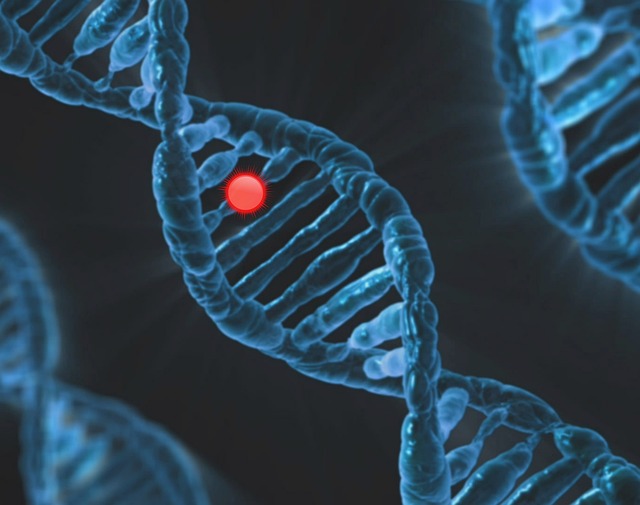


When we think of territorial conquest, we often imagine armies, borders, and the dramatic reshaping of landscapes. Yet, in the quiet laboratories and data centers of the 21st century, a different kind of conquest unfolds—a conquest of knowledge, of cellular maps, and of the very blueprints that define human health. The battlefield is no longer a field but the human genome, a sprawling terrain of nucleotides that holds secrets to disease, resilience, and personalized medicine. This article explores how modern healthcare is engaging in a territorial conquest of the genomic frontier, turning the invisible into actionable terrain for clinicians, researchers, and patients alike.
Charting the Genetic Landscape
Advances in sequencing technologies have turned the daunting task of decoding entire genomes from a monumental challenge into a routine laboratory procedure. Whole-genome sequencing (WGS) now delivers data at a fraction of the cost and time it once required. This surge in data availability has paved the way for detailed cartography of genetic variations—single nucleotide polymorphisms, copy number variations, and structural rearrangements—that influence disease susceptibility and drug response.
- Population genomics studies identify ancestry-informative markers, revealing how genetic traits cluster across human societies.
- Comparative genomics uncovers conserved elements, guiding drug target discovery and therapeutic development.
- Genomic epidemiology tracks pathogen evolution in real time, offering a new dimension to public health surveillance.
Precision Medicine: The New Frontier
Precision medicine tailors treatment strategies to an individual’s genetic makeup, environmental exposures, and lifestyle. The territorial conquest here is twofold: mapping the genetic terrain and navigating the therapeutic map that follows.
“Every patient carries a unique genetic map. The challenge is not to read the map, but to interpret it accurately for better outcomes.” — Dr. Elena Martinez, Genomic Medicine Institute
From oncology to cardiology, clinicians increasingly integrate genomic data into decision-making processes. For instance, identifying BRCA1 or BRCA2 mutations informs surveillance strategies for breast and ovarian cancers, while pharmacogenomic markers like CYP2D6 guide antidepressant dosing. This practice transforms the patient experience from a one-size-fits-all model to a personalized journey through genomic territory.
Genomic Data Integration in Clinical Workflows
Effective territorial conquest requires robust infrastructure to store, analyze, and interpret genomic data. Electronic health records (EHRs) now incorporate genomic annotations, enabling clinicians to query a patient’s genetic profile alongside traditional clinical metrics. Integration pipelines employ variant calling, annotation tools, and evidence-based knowledge bases to flag actionable findings.
- High-throughput sequencing produces raw reads that are aligned to reference genomes.
- Variant callers detect differences, producing lists of single nucleotide variants (SNVs) and indels.
- Annotation platforms, such as ClinVar and gnomAD, provide pathogenicity scores and allele frequencies.
By overlaying these layers, healthcare systems effectively conquer the territory of data complexity, making genomic insights accessible to frontline providers.
Ethical Frontiers and the Human Canvas
As we map more genetic territory, ethical questions arise: How do we balance the benefits of knowledge with privacy concerns? Who owns the genetic map that belongs to every individual? In many jurisdictions, legislation such as the Genetic Information Nondiscrimination Act (GINA) attempts to safeguard individuals against misuse. Yet, the rapid expansion of direct-to-consumer genetic testing services challenges these frameworks, raising issues of data security, informed consent, and the commercial exploitation of genetic information.
“The genome is a public resource and a private treasure. Conquest must respect both stewardship and individual sovereignty.” — Dr. Rajiv Patel, Bioethics Scholar
Population Genomics: Mapping Diversity
Understanding population-level genetic variation is critical for global health equity. Historically, genomic studies have underrepresented non-European ancestries, leading to biases in variant interpretation and treatment recommendations. Recent initiatives aim to close this gap by sequencing diverse populations worldwide.
- The Human Heredity and Health in Africa (H3Africa) project provides a repository of African genomic data.
- Latin American Genome Initiative (LAGI) captures the genetic diversity of Hispanic and Indigenous communities.
- East Asian Genome Project offers insights into disease prevalence unique to those populations.
By conquering the genetic terrain of diverse groups, researchers can develop therapies that are truly universal and avoid disparities rooted in historical neglect.
Real-Time Genomic Surveillance
The COVID-19 pandemic underscored the importance of genomic mapping in real-time public health responses. Genomic surveillance tracks viral mutations, informing vaccine updates and containment strategies. This dynamic territorial conquest requires rapid sequencing, data sharing, and analytical pipelines that can detect emerging threats within days.
“In the war against pathogens, the speed of genetic mapping determines the survival of populations.” — Dr. Maria Gonzales, Infectious Disease Specialist
Such real-time mapping also extends to antibiotic resistance genes, enabling clinicians to tailor antibiotic regimens before resistant strains spread beyond individual cases.
Future Horizons: Gene Editing and Beyond
The frontier of healthcare innovation is not limited to diagnostics; it extends to therapeutic interventions that directly modify genetic territory. CRISPR-Cas9 technology allows precise editing of pathogenic mutations, offering potential cures for inherited diseases. Although early trials focus on ex vivo editing of hematopoietic stem cells for conditions like sickle cell disease, future developments may enable in vivo corrections.
- Preclinical models demonstrate successful correction of pathogenic loci.
- Clinical trials for CRISPR-based therapies are currently enrolling participants for various monogenic disorders.
- Regulatory frameworks are evolving to address the ethical implications of germline editing.
These advancements signal a shift from mapping genomic territory to reshaping it—turning the conquest from observational to transformative.
Integrating Multi-Omics for Comprehensive Cartography
While genomics provides a static snapshot of potential, other omics layers—transcriptomics, proteomics, metabolomics—offer dynamic insights into how genes are expressed and how metabolic pathways operate. Integrating these datasets enables a multidimensional map of biological processes, crucial for complex diseases like cancer, diabetes, and neurodegeneration.
“The genome is the foundation, but the epigenome, proteome, and metabolome build the structure above it.” — Dr. Yvonne Lee, Systems Biologist
By conquering this integrated territory, clinicians can develop biomarkers that predict disease progression, therapeutic responses, and adverse effects with unprecedented precision.
Conclusion: A New Paradigm of Territorial Conquest
The concept of territorial conquest, once confined to maps and armies, has found a new arena in the genomic landscape of modern healthcare. This conquest is collaborative, multidisciplinary, and patient-centered. It demands not only technological prowess but also ethical vigilance and equitable access. As we continue to chart, analyze, and, eventually, remodel this intricate terrain, the promise of personalized, effective, and compassionate care becomes increasingly tangible.